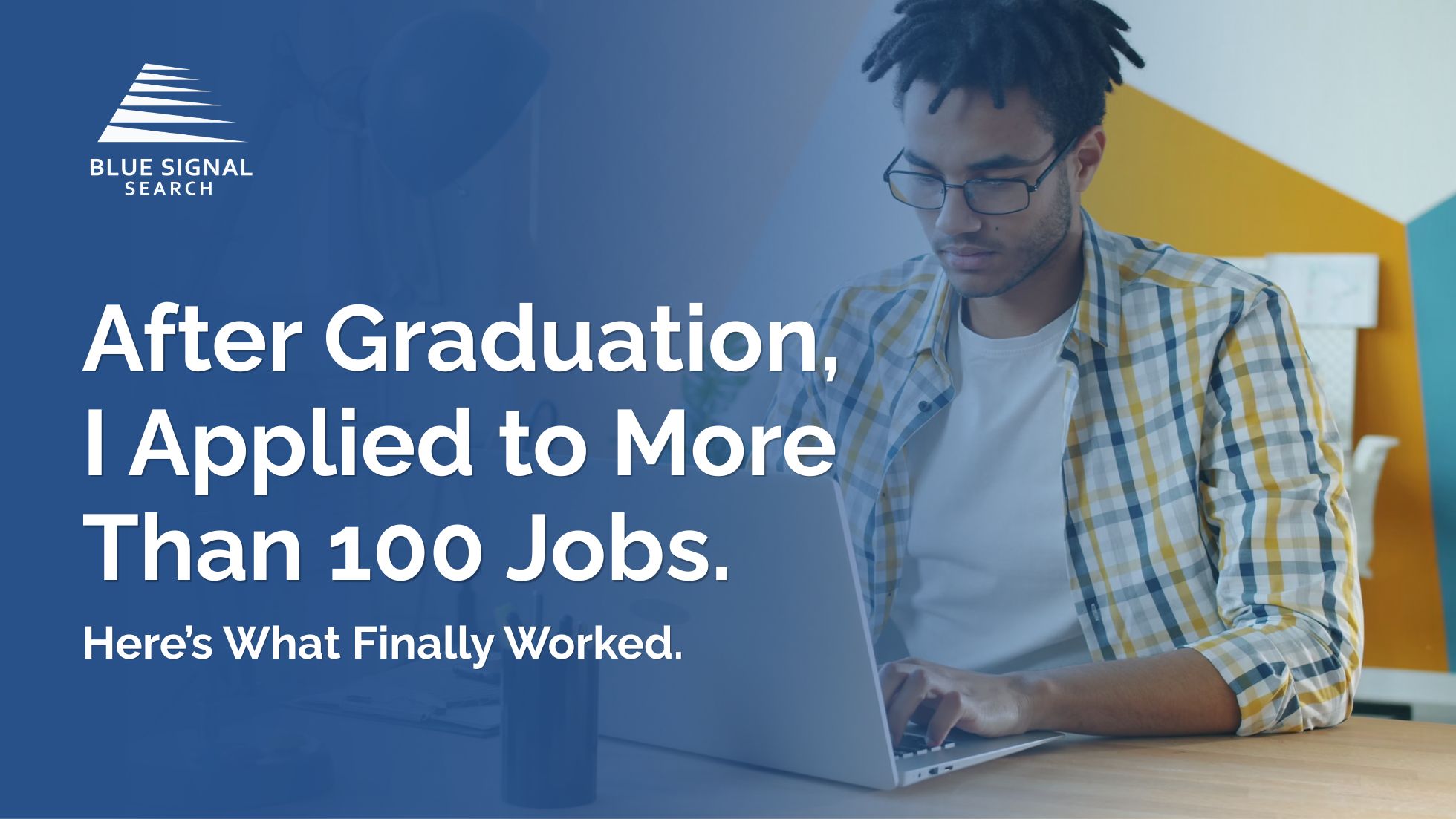
When I graduated from Grand Canyon University in 2024 with a degree in marketing, I thought I had followed the right path into my career. I had earned a degree, completed an internship, and gained actual hands-on experience. Like many new graduates, I hoped that internship would naturally lead to a full-time position after school.
It didn’t.
Suddenly, I was back home trying to figure out what came next. I returned to the job I had in high school as a swim coach and worked as a barista at the same time. Neither role matched the picture I had in mind when I imagined life after earning a marketing degree, and it was difficult not to feel as though I had taken a step backward.
At the same time, I was applying everywhere. I submitted more than 100 applications, often without receiving a response. I kept adjusting my resume, rewriting sections, and trying to understand what employers wanted from an entry-level candidate who was somehow expected to already have years of experience.
That period was frustrating, but it also taught me that the beginning of a career does not always look like a clean transition from college to a corporate role.
My “In-Between” Jobs Were Still Building My Career
Going back to coaching and working as a barista initially felt disconnected from marketing. In reality, I was developing skills I would later use every day.
Coaching children strengthened my communication, patience, organization, and leadership. Working as a barista taught me how to manage competing priorities, work quickly, solve problems, and create a positive experience for different types of people. Those skills may not have come from a job with “marketing” in the title, but they were still valuable.
I also looked for ways to keep doing creative work. I completed graphic design projects for my city and for the swim team, and I built a website for the team while continuing to coach. Those projects gave me real examples of my abilities and helped me continue building a portfolio while searching for a full-time opportunity.
One of the biggest lessons I learned is that early-career experience does not have to come from one perfectly titled position. Freelance projects, part-time jobs, volunteer work, campus involvement, and responsibilities you take on within a role you already have can all demonstrate what you know how to do. The key is learning how to explain that connection.
Instead of describing myself only as a swim coach or barista, I began seeing the complete picture: I was a marketing graduate who had designed materials, built a website, worked with a local organization, communicated with families, coached a team, and balanced several responsibilities at once.
Skills are playing a bigger role in entry-level hiring.
70% of employers participating in NACE's Job Outlook 2026 survey report using skills-based hiring for entry-level hires.
For recent graduates, experiences outside a traditional full-time role can still show employers the skills they are looking for.
Source: NACE Job Outlook 2026 ↗What Applying to More Than 100 Jobs Taught Me
For a while, my application strategy was mostly about volume. I felt that if I applied to enough positions, one of them would eventually work out. But sending more applications did not automatically make those applications stronger.
As I continued searching, I became more intentional. I revised my resume based on the roles I wanted, paid closer attention to the language in job descriptions, and tried to show how my experience connected to each opportunity. I stopped assuming employers would make those connections for me.
I also learned that a resume is never truly “finished.” It should change as your experience grows and as you learn what communicates your value most clearly. Blue Signal’s resume updating tips reinforced several of the adjustments I was already beginning to make, including tailoring my resume, focusing on relevant skills, and presenting my experience more strategically.
For other recent graduates, that does not mean rewriting every line for every application. It means identifying the most important traits or skills in the job description and making sure your resume clearly shows the experience, projects, and transferable abilities that relate to them.
The Opportunity I Almost Scrolled Past
During my search, I came across career advice from Blue Signal. The company shared the kind of practical resume and application guidance I had been looking for, both through its career resources and online social content. That led me to explore the company more closely.
Then I found an opening for a Marketing and Design Specialist.
This time, I was not applying to a completely unfamiliar company. I had already seen Blue Signal show up as a resource for job seekers. I applied directly, interviewed, and got the job.
There was something fitting about beginning my career with the same company whose advice had helped me improve the way I went about my search. I had spent months trying to present my experience more clearly, and the role ultimately brought together the skills I had been developing across school, design projects, website building, coaching, customer service, and my internship.
My path into marketing was not as direct as I expected. It still led me where I wanted to go.
What I Would Tell Other Gen Z Job Seekers
If you are graduating, job searching, or working in a role that feels unrelated to your long-term goals, here is what I wish I had known sooner.
Do not dismiss the experience you already have.
Your part-time job, campus role, freelance project, volunteer work, or side project may demonstrate communication, leadership, organization, customer service, problem-solving, or technical skills. Those abilities count. Be specific about what you did and what you created.
Create evidence of the work you want to do.
I did not wait for a company to give me a full-time marketing title before continuing to design and build. My design work and the team website gave me projects I could discuss and show. If your target field allows it, a small portfolio can help employers see more than a list of responsibilities.
Tailor your resume enough to make the connection obvious.
Hiring teams don't want to guess why your experience is relevant. Use the job description as a guide, prioritize the skills the role actually requires, and describe transferable experience in clear terms. Find job seeker resources to help bring together resume and interview guidance that can help you evaluate your materials before applying.
Apply directly and learn about the company.
Large job boards made it easy for me to keep submitting applications, but visiting company websites gave me more context. It helped me understand what an organization did, what it valued, and whether I could picture myself there.
Use career content before you urgently need it.
Some of the most useful guidance is easy to scroll past when you are focused only on job listings. Following recruiting and career-focused accounts on LinkedIn can help you improve your resume, prepare for interviews, and understand the hiring process over time. Resources such as articles on overcoming job search frustration can be especially helpful when the search starts to feel isolating.
Let yourself be frustrated without deciding you have failed.
Rejection, silence, and uncertainty can make a job search feel personal. Often, they are not a measure of your ability or potential. Give yourself room to be disappointed, then return to what you can control: the quality of your documents, the skills you are building, the people you connect with, and the roles you choose to pursue.
A Career Can Start Before the Job Title Does
Looking back, my career did not begin the day I accepted my position at Blue Signal. It was already taking shape while I was coaching children, making coffee, designing materials, building a website, and learning how to keep going through a difficult search.
Getting the job mattered, but so did everything I built along the way.
For Gen Z professionals entering today’s workforce, the first step may not look like the one you planned. You may work multiple jobs, take on freelance projects, return to something familiar, or submit far more applications than you expected. None of that means your degree was wasted or your career is off track.
Sometimes the path is less direct. Sometimes the experience that feels temporary becomes the proof that you are ready for what comes next.
If you are still looking, keep tweaking your approach, keep showing evidence of what you can do, and keep paying attention to the resources that truly help job seekers. The right opportunity may come from a place you first discovered while simply looking for better advice.

Partner with us for your next hire.
Tell us about your hiring need.
By submitting this form, you consent to receive communications from Blue Signal via phone, email, and conversational SMS. Message frequency varies. Msg & data rates may apply. Reply STOP to opt out or HELP for assistance. Visit Privacy Policy and Terms of Service.
