Semiconductors power nearly every major area of modern innovation, including artificial intelligence, data centers, electric vehicles, telecommunications, advanced manufacturing, and consumer technology. As domestic chip investment expands, semiconductor companies are competing for a limited supply of engineers, technicians, operations leaders, and specialized executives.
Arizona’s rapid semiconductor growth shows the scale of this challenge. Major manufacturing investments cannot reach their full potential without the workforce to support construction, production, research, and long-term operations. However, semiconductor hiring is not concentrated in one region. Established technology centers, new fabrication projects, university research ecosystems, advanced manufacturing markets, and logistics hubs are all influencing where companies search for talent.
The markets below reflect different parts of the semiconductor value chain. Some are established centers for chip design and fabrication, while others are gaining relevance through advanced manufacturing, logistics, commercial operations, research, or access to regional talent.

A Transformational Semiconductor Expansion
Syracuse is becoming one of the most closely watched semiconductor markets in the country. Micron’s planned memory manufacturing complex in nearby Clay represents the largest private investment in New York State history and is expected to reshape Central New York’s economy for decades.
Micron broke ground on the project in January 2026 and selected Bechtel to support the engineering, procurement, and construction of its first phase. The complete project is expected to generate approximately 50,000 jobs across semiconductor manufacturing, construction, suppliers, and supporting industries.
Why Employers Should Watch Syracuse
The project will create demand well beyond Micron’s direct workforce. Equipment manufacturers, materials suppliers, specialty contractors, engineering firms, and cleanroom service providers will all need professionals capable of supporting a highly technical manufacturing environment.
Central New York will need to build much of this workforce while competing nationally for candidates with existing fab experience.
Semiconductor roles to watch: Process Engineers, Equipment Engineers, Facilities Engineers, Cleanroom Technicians, EHS Managers, Construction Project Managers, Supply Chain Leaders, and Fab Operations Executives.
An Emerging Technology and Business Gateway
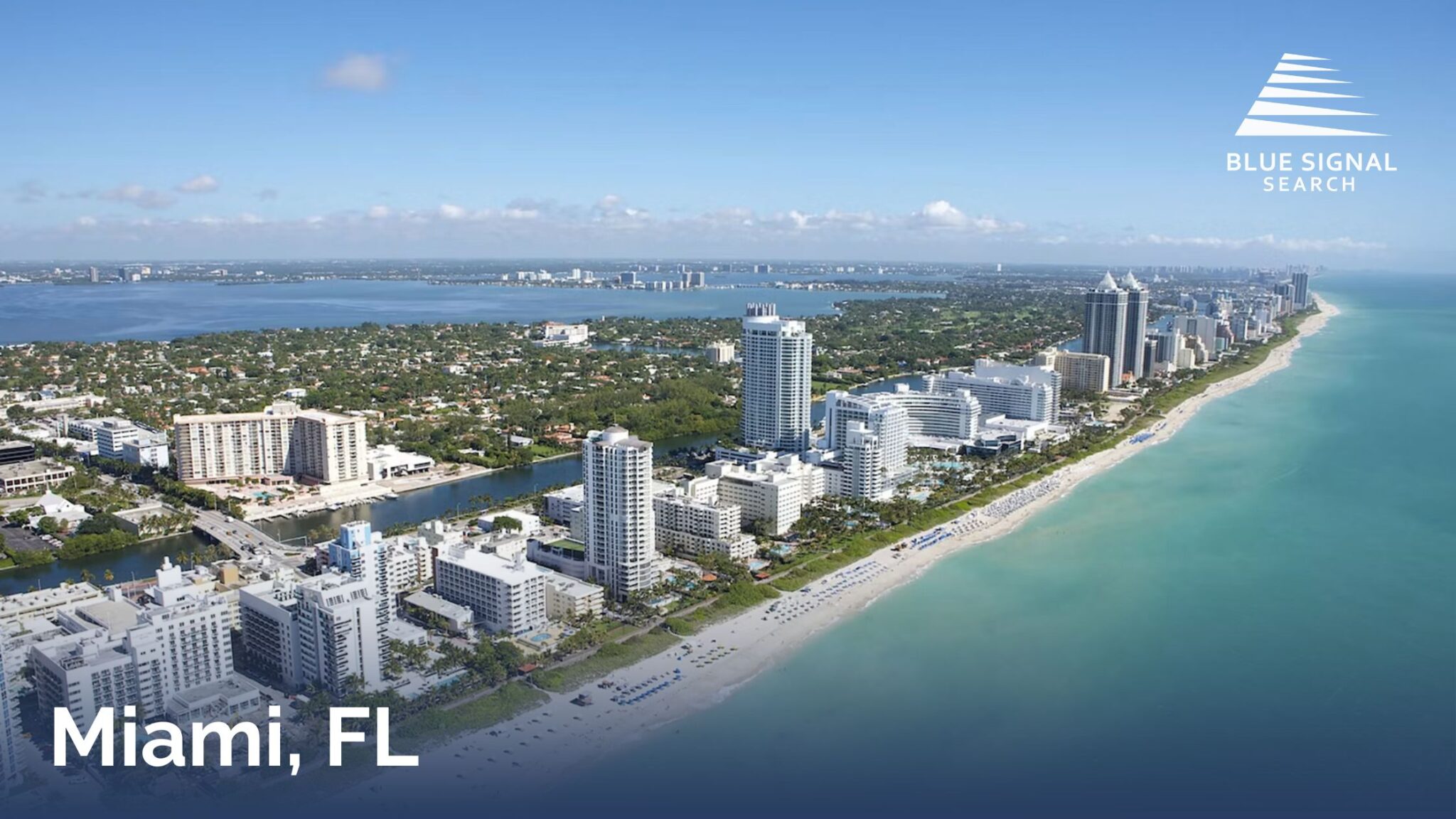
Miami is not a traditional semiconductor fabrication center, but its growing technology sector, international business connections, and access to Latin American markets give it a distinct position within the broader industry.
Semiconductor companies need more than fabrication talent. They also require professionals supporting technical sales, distribution, supply chain operations, finance, product management, and regional business development. Miami’s global connectivity makes it a market worth monitoring for these commercial and operational functions.
Why Employers Should Watch Miami
Florida is strengthening its broader semiconductor workforce through university partnerships and industry training. For Miami, the opportunity is especially strong among companies expanding distribution, sales, electronics, aerospace, and international supply chain operations.
Employers entering this market may need to recruit nationally for highly specialized technical positions while using Miami’s existing business talent for customer-facing and operational roles.
Semiconductor roles to watch: Technical Sales Engineers, Applications Engineers, Product Managers, Supply Chain Managers, Distribution Leaders, Business Development Directors, Quality Engineers, and Regional Executives.

The Center of Semiconductor Design and Innovation
The San Francisco Bay Area remains one of the world’s most influential semiconductor ecosystems. While large-scale chip production has expanded into other states, Silicon Valley continues to lead in chip design, artificial intelligence hardware, electronic design automation, venture-backed innovation, and semiconductor software.
The region’s concentration of established technology companies, startups, investors, and engineering talent makes it especially important for fabless semiconductor firms and organizations developing advanced computing architectures.
Why Employers Should Watch San Francisco
Demand for AI infrastructure is increasing competition for professionals with experience in GPUs, ASICs, high-bandwidth memory, advanced networking, verification, and system architecture. Companies like Nvidia are frequently competing for the same narrow group of candidates, particularly at the senior engineering and executive levels.
The Bay Area provides unmatched access to experienced talent, but employers must contend with high compensation expectations and aggressive competition from other semiconductor, AI, and cloud technology companies.
Semiconductor roles to watch: ASIC Design Engineers, Verification Engineers, Physical Design Engineers, AI Chip Architects, Firmware Engineers, Product Engineering Leaders, R&D Directors, and Chief Technology Officers.

An Emerging Advanced Manufacturing Market
Las Vegas is developing a broader economy that extends beyond hospitality and entertainment. Southern Nevada is attracting advanced manufacturing, clean technology, logistics, and information technology projects, creating a stronger foundation for electronics and semiconductor-adjacent operations.
The Las Vegas Global Economic Alliance reported 44 manufacturing projects in its active pipeline in mid-2026. Although these projects are not exclusively semiconductor-related, the activity signals increasing regional demand for technical manufacturing and operational talent.
Why Employers Should Watch Las Vegas
Las Vegas offers proximity to semiconductor activity in Arizona and California while providing access to industrial sites, regional transportation networks, and a growing manufacturing workforce. That combination could make the market attractive to suppliers, equipment companies, distributors, and supporting operations.
The region remains an emerging semiconductor market, meaning employers may need relocation strategies to secure candidates with direct wafer fabrication or advanced packaging experience.
Semiconductor roles to watch: Manufacturing Engineers, Equipment Technicians, Quality Managers, Field Service Engineers, Warehouse Operations Leaders, Supply Chain Managers, Facilities Engineers, and Site Directors.

America’s Fastest-Growing Semiconductor Hub
Phoenix has become a central market for advanced semiconductor manufacturing. The region includes major operations and investments from TSMC, Intel, onsemi, NXP Semiconductors, Amkor Technology, and a growing network of equipment, materials, engineering, and construction partners.
In July 2026, TSMC announced an additional $100 billion investment that would bring its total planned Arizona investment to $265 billion. The company’s Arizona operations are expected to include 12 facilities, while its first Phoenix fab has already entered volume production.
Why Employers Should Watch Phoenix
Phoenix’s growth spans the semiconductor value chain, including fabrication, advanced packaging, equipment, materials, research, and workforce development. This makes it one of the most promising markets for semiconductor employment—and one of the most competitive.
The greatest challenge will be developing talent quickly enough to support simultaneous expansions. Employers must compete for candidates across engineering, cleanroom operations, construction, facilities, maintenance, supply chain, and leadership.
Semiconductor roles to watch: Process Engineers, Equipment Engineers, Yield Engineers, Manufacturing Technicians, Facilities Managers, Advanced Packaging Engineers, Construction Leaders, and Fab Executives.

North Carolina’s Semiconductor Connection
Charlotte benefits from North Carolina’s expanding semiconductor and microelectronics sector. The state has developed strengths in power electronics, radio frequency technologies, photonics, advanced materials, and wide-bandgap semiconductors.
North Carolina has attracted more than $7.9 billion in semiconductor-related investment over the past decade and supports approximately 73,000 workers in core semiconductor-related fields. Statewide semiconductor employment has grown significantly since 2021.
Why Employers Should Watch Charlotte
Although much of North Carolina’s semiconductor research is concentrated around the Research Triangle, Charlotte contributes advanced manufacturing, engineering, energy, logistics, financial, and corporate leadership talent.
The city may be particularly valuable for semiconductor companies seeking professionals in power electronics, supply chain management, corporate operations, and commercial leadership.
Semiconductor roles to watch: Power Electronics Engineers, Materials Engineers, Applications Engineers, Operations Managers, Supply Chain Directors, Technical Sales Leaders, Finance Executives, and General Managers.

The Rise of the Silicon Heartland
Indiana is positioning itself as a major semiconductor and microelectronics market. SK hynix plans to invest more than $3.87 billion in an advanced semiconductor packaging and research facility at Purdue Research Park in West Lafayette.
The facility will focus on high-bandwidth memory used in AI systems and is expected to create up to 800 jobs by the end of 2030. Since 2022, eight semiconductor companies have announced Indiana projects totaling more than $6 billion in planned investment.
Why Employers Should Watch Indianapolis
Indianapolis serves as Indiana’s primary corporate, logistics, and talent center, connecting employers with Purdue University, advanced manufacturing operations, defense-related microelectronics research, and the state’s growing technology corridor.
As investment spreads, competition will rise for professionals who understand advanced packaging, memory technology, manufacturing automation, and semiconductor supply chains.
Semiconductor roles to watch: Advanced Packaging Engineers, Process Integration Engineers, R&D Engineers, Automation Engineers, Maintenance Technicians, Technical Program Managers, Operations Directors, and Talent Development Leaders.

A Supply Chain and Manufacturing Market to Monitor
Savannah’s semiconductor opportunity is tied primarily to its strength in logistics, industrial development, automotive manufacturing, and global trade. The Port of Savannah provides a major gateway for equipment, materials, components, and finished electronics moving through the Southeast.
The surrounding region also continues to prepare industrial sites for new manufacturing activity. In 2026, the 1,356-acre Savannah Portside International Park received an advanced development certification supporting future industrial projects.
Why Employers Should Watch Savannah
Savannah is best viewed as an emerging semiconductor supply chain market rather than an established chip fabrication hub. Its growing automotive and electric vehicle ecosystem could create additional demand for power electronics, sensors, microcontrollers, and other semiconductor-enabled systems.
Companies supporting electronics manufacturing, transportation, distribution, and industrial technology may find Savannah increasingly valuable as Southeast supply chains expand.
Semiconductor roles to watch: Supply Chain Engineers, Logistics Managers, Supplier Quality Engineers, Manufacturing Engineers, Procurement Leaders, Warehouse Operations Managers, Field Service Engineers, and Regional Operations Directors.
Semiconductor Hiring Trends Employers Should Prepare For
These eight markets illustrate how semiconductor growth is spreading across several different types of locations:
- Established design and innovation markets: San Francisco
- Major fabrication and expansion markets: Phoenix and Syracuse
- Research and advanced packaging markets: Indianapolis
- Regional engineering and power electronics markets: Charlotte
- Emerging commercial, manufacturing, and supply chain markets: Miami, Las Vegas, and Savannah
Across these locations, employers are likely to face strong competition for professionals in:
- Semiconductor process and equipment engineering
- IC, ASIC, and verification design
- Advanced packaging and test engineering
- Yield, reliability, and quality engineering
- Cleanroom operations and maintenance
- Facilities, utilities, and environmental safety
- Supply chain and materials management
- Technical sales and applications engineering
- Site, operations, and executive leadership
Hiring Guidance and Conclusion
Semiconductor companies should not approach every market with the same recruiting strategy. A mature talent center like San Francisco requires a different approach than a rapidly scaling manufacturing market like Phoenix or Syracuse. Emerging locations may offer cost and expansion advantages, but employers must account for smaller local candidate pools and a greater need for relocation support.
A successful specialized recruiting strategy should combine proactive candidate sourcing, regional talent mapping, compensation benchmarking, technical qualification, and long-term workforce planning. Waiting until a facility opens or a project reaches production can leave employers competing for talent after the strongest candidates have already been secured.
As domestic semiconductor investment continues, the companies that plan their hiring strategies early will be best positioned to scale production, protect project timelines, and capitalize on the next phase of U.S. semiconductor growth.
Frequently Asked Questions
Partner with us for your next hire.
Tell us about your hiring need.
By submitting this form, you consent to receive communications from Blue Signal via phone, email, and conversational SMS. Message frequency varies. Msg & data rates may apply. Reply STOP to opt out or HELP for assistance. Visit Privacy Policy and Terms of Service.
